

The “Warrantless” Loophole: Why Mobile Hygiene is Now Physical Security
For security awareness professionals, the mission has moved far beyond just preventing phishing. Today, the biggest threat to an employee’s privacy—and by extension, their physical security—isn’t a hacker; it’s the commercial data economy. Agencies like ICE and other government entities are increasingly bypassing the traditional warrant process by simply buying location data from brokers.
This creates a “dragnet” effect where an individual can be identified simply by their routine. If a device moves from a specific home to a specific office every day, you don’t need a name to know exactly who that person is. To protect our workforce, we must expand our training to include commercial privacy hygiene.
Advice to Encourage Among Employees
When updating your awareness curriculum, consider these high-impact strategies to help employees “drop off the map”:
-
Kill the Advertising ID: This is the “Social Security Number” of the tracking world. Teach your team how to delete or reset their Mobile Advertising ID (IDFA on iOS, AAID on Android). This single step can break the link between their physical movement and their digital profile.
-
Audit “Ambient” Leaks: We often tell employees to turn off Wi-Fi/Bluetooth for security, but we should also frame it as a privacy win. Disabling Wi-Fi and Bluetooth scanning prevents “beacons” in retail stores or public spaces from tracking their presence without them ever connecting to a network.
-
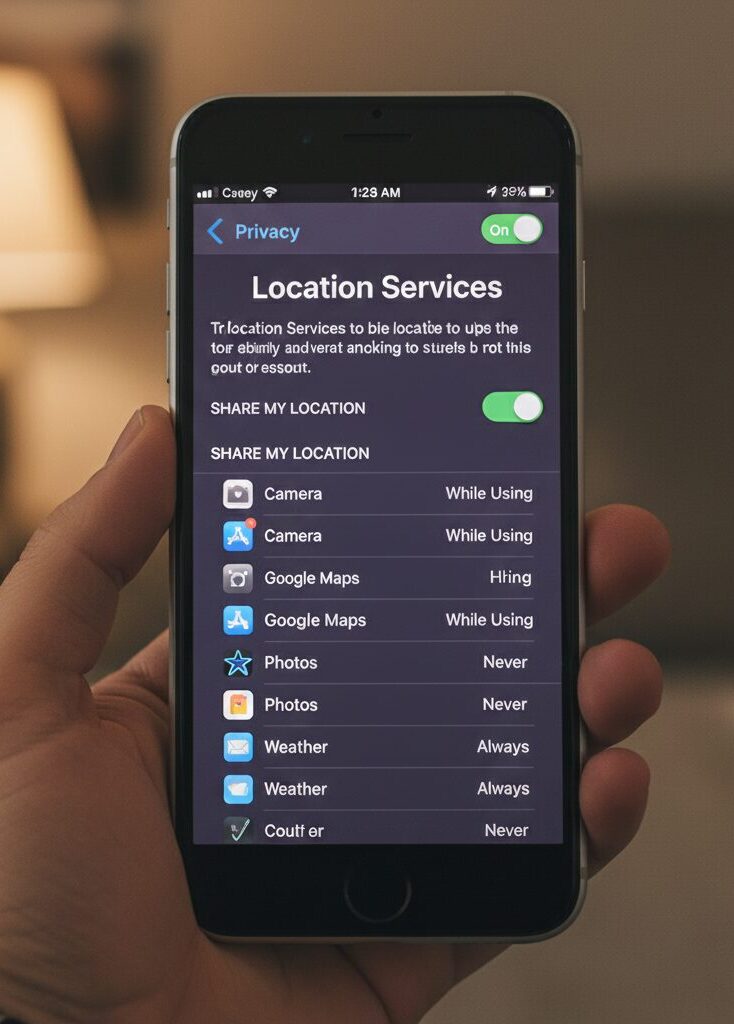
The “Never/While Using” Rule: Encourage a strict audit of location permissions. There is almost no reason for a game, weather app, or retail app to have “Always” or “Background” location access. If it doesn’t need to know where you are to function right now, the permission should be revoked.
-
Opt-Out of the Major Players: Provide employees with a shortlist of high-impact data brokers that feed government datasets, such as PenLink, Gravy Analytics, and Mobilewalla. These companies often have specific (though hidden) opt-out pages.
-
Automate the “Whack-a-Mole”: For those with a higher risk profile, recommend subscription services like Incogni, Optery, or DeleteMe. These services handle the tedious process of requesting deletions from hundreds of brokers simultaneously.
By teaching our teams how to shrink their digital footprint, we aren’t just protecting their data—we’re protecting their right to move through the world without a commercial tail.
 | Read the full breakdown on stopping government tracking here:Protect Your Privacy: Stop ICE and the Government from Tracking You |

No responses yet